Call us now:

GAINESVILLE • ALACHUA COUNTY • NORTH FLORIDA
Gainesville Theft and Fraud Lawyer
Defense for theft, fraud, financial investigations, and property-crime allegations.
Board Certified
Criminal Trial Lawyer
20+ Years
Criminal-Defense Experience
Theft & Fraud Defense
Records • Digital Evidence • Trials
Florida Theft & Fraud Resource Center
Theft, Fraud & Financial-Crime Guides
Explore Florida theft laws, fraud offenses, investigations, digital evidence, constitutional issues, and restitution.
What Is Theft Under Florida Law?
Florida’s general theft statute is § 812.014, Florida Statutes. Theft requires proof that a person knowingly obtained, used, or endeavored to obtain or use another person’s property with the required intent to deprive the owner of a right or benefit in the property or to appropriate it to an unauthorized use.
That intent requirement matters. A disputed transaction, ownership disagreement, mistake, misunderstanding, accounting problem, or good-faith belief in a right to possess property is not automatically the same thing as criminal theft.
The defense should examine ownership, authorization, value, intent, identification, financial records, surveillance, digital evidence, witness accounts, and statements attributed to the accused.
Florida Theft Levels and Value Thresholds
For ordinary property theft, value is a major factor in grading the offense, although special property and circumstances can change the result.
< $100
Under $100
Generally petit theft of the second degree when no special rule applies.
$100+
$100–$749.99
Generally petit theft of the first degree.
$750+
$750–$19,999.99
Generally grand theft of the third degree.
$20K+
$20,000–$99,999.99
Generally grand theft of the second degree.
$100,000 or more: generally grand theft of the first degree. Motor vehicles, firearms, and certain other property can carry felony treatment apart from ordinary thresholds.
Retail Theft and Shoplifting
Florida’s retail-theft statute, § 812.015, addresses retail theft, merchant detention, anti-shoplifting measures, and specified coordinated or repeated retail-theft conduct.
A retail case should be evaluated under both the general theft statute and the specific retail-theft statute.
Fraud and Financial-Crime Cases
Fraud charges typically focus on alleged deception, false representations, unauthorized use of information, or a claimed scheme to obtain money or property. Different statutes contain different elements.
These cases often depend on bank records, account histories, emails, texts, contracts, invoices, access logs, phone data, surveillance, and forensic examinations.
Common Allegations
Common Florida Theft and Fraud Allegations
The precise elements depend on the statute charged. These are common categories in property and financial investigations.
Organized FraudA scheme to defraud through which property is obtained. Separate values in one alleged scheme can be aggregated.
Communications FraudCommunications made in furtherance of a scheme to defraud with intent to obtain property.
Identity TheftSpecified fraudulent use of another person’s personal identification information without authorization or consent.
Credit-Card FraudSpecified unauthorized credit-card use or representations made with intent to defraud.
Forgery & UtteringAllegations involving forged signatures, checks, instruments, or knowingly presenting a forged document.
Employee or Business TheftCompany funds, inventory, expense accounts, transfers, payroll, bookkeeping, or entrusted property.
Computer & Digital EvidencePhones, cloud accounts, emails, account logins, IP records, payment systems, and forensic evidence.
Multiple TransactionsWhether separate transactions can lawfully be treated as one scheme can affect the degree of the charge.
Organized Fraud Under § 817.034
Florida’s Communications Fraud Act defines a “scheme to defraud” and creates organized fraud. Under the 2026 statute, organized fraud is a third-degree felony when the aggregate value obtained is less than $20,000, a second-degree felony at $20,000 or more but less than $50,000, and a first-degree felony at $50,000 or more.
Because amounts obtained in one alleged scheme may be aggregated, the defense should examine whether the transactions actually belong to one scheme, what property was obtained, and how value was calculated.
Defense Issues
Defenses and Legal Issues in Theft and Fraud Cases
The available defense depends on the actual charge and evidence. These cases often turn on intent, authorization, value, identification, digital evidence, and investigative methods.
Lack of Criminal IntentA mistake, misunderstanding, accounting dispute, or incomplete transaction is not automatically criminal intent.
Good-Faith Claim of RightA genuine belief in a right to possess or use property can be important to theft intent.
Consent or AuthorizationThe defense may dispute whether use, access, possession, transfer, or disposal was authorized.
Disputed ValueReceipts, condition, depreciation, market value, and expert evidence can affect the degree of the charge.
Identity & AttributionVideo, device data, signatures, IP records, credentials, and access logs can be incomplete or disputed.
Insufficient Proof of a SchemeSeparate suspicious transactions do not automatically establish the statutory scheme required for organized fraud.
Search-Warrant IssuesPhones, computers, cloud records, homes, vehicles, and business records can raise Fourth Amendment issues.
Statements to InvestigatorsExplanations about money, ownership, transactions, or access can become prosecution evidence.
Theft and Fraud Investigations Before Arrest
Financial cases often begin before arrest. A detective may request an interview, an employer may report suspected losses, a merchant may provide records, or investigators may seek warrants for phones, computers, homes, or cloud accounts.
Early representation can help identify whether a person is a witness, suspect, or target; preserve favorable documents; and organize financial evidence.
Digital Evidence and Financial Records
Modern theft and fraud investigations can rely on phone extractions, text messages, emails, account logins, cloud data, surveillance, transaction histories, location information, metadata, and third-party records.
The defense should examine authenticity, completeness, context, chain of custody, and whether the data was lawfully obtained.
Restitution in Florida Theft and Fraud Cases
Florida’s restitution statute, § 775.089, generally requires restitution for loss caused directly or indirectly by the offense or related criminal episode unless the court finds clear and compelling reasons otherwise.
Restitution must generally be determined on a fair-market-value basis unless another basis better furthers restitution’s purposes. The State Attorney bears the burden of demonstrating the amount of the loss.
Restitution disputes can involve causation, recovered property, depreciation, repair records, duplicated claims, insurance issues, and whether a claimed loss is sufficiently connected to the offense.

Gainesville • Alachua County
Theft and Fraud Cases in Gainesville
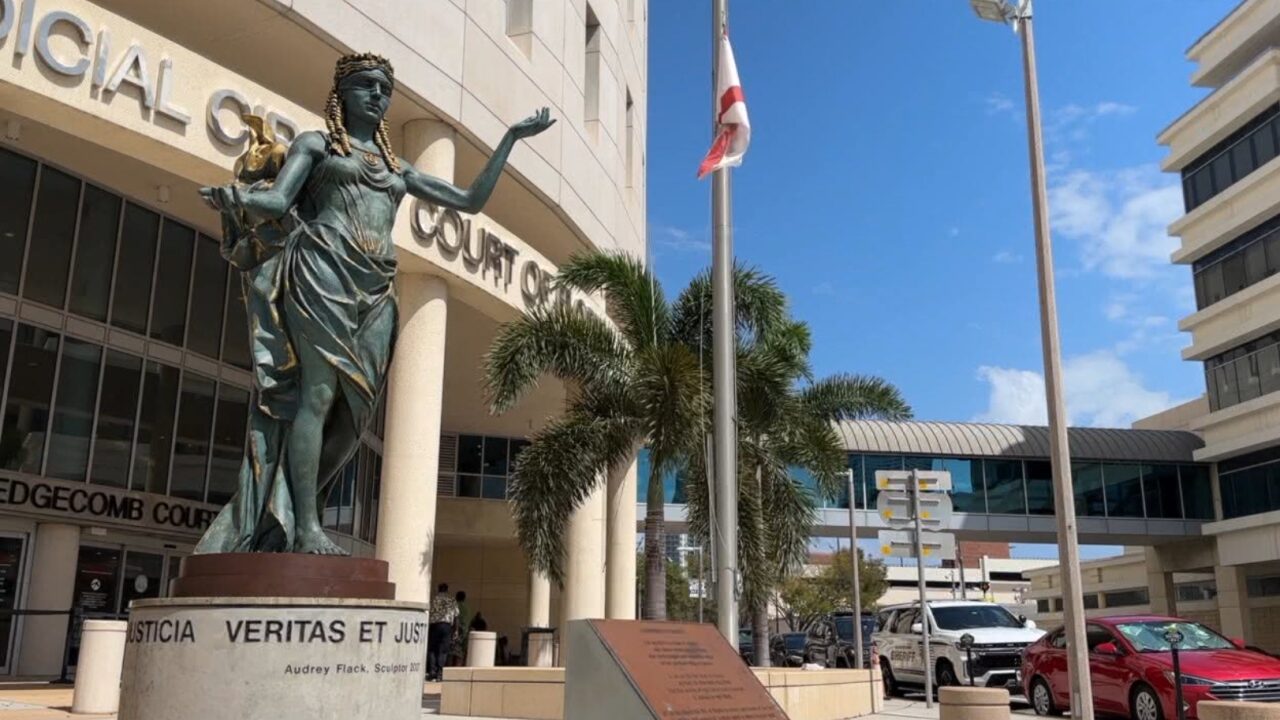
Felony, misdemeanor, and criminal-traffic court events in Alachua County are handled at the Judge Stephan P. Mickle, Sr. Criminal Courthouse at 220 South Main Street in Gainesville.
Theft and fraud investigations may begin with local law enforcement, retail loss-prevention personnel, financial institutions, employers, state agencies, or digital and financial records obtained before an arrest is made.
Photo: Alachua County criminal courthouse in Gainesville, Florida. Ebyabe / Wikimedia Commons.
Theft and Fraud Defense in Gainesville, Alachua County & North Florida
Landsman Law is based in Gainesville and represents people accused of theft, fraud, and financial offenses throughout Alachua County and North Florida. Investigations may involve the Gainesville Police Department, Alachua County Sheriff’s Office, University of Florida Police Department, retail loss-prevention personnel, financial institutions, state agencies, or other investigators.
The firm also represents clients in Bradford, Gilchrist, Levy, Union, Columbia, Marion, and Putnam Counties.
Why Choose Landsman Law?
Matt Landsman is a Board Certified Criminal Trial Lawyer with more than 20 years of criminal-law experience. Theft and fraud cases can require detailed review of records, digital evidence, warrants, statements, valuations, and transaction history.
Landsman Law represents clients from the investigative stage through motions, negotiations, evidentiary hearings, trial, sentencing, and appeal.
Google Reviews




Frequently Asked Questions About Florida Theft and Fraud Charges
What is the difference between petit theft and grand theft in Florida?
For ordinary property theft, property below $750 generally falls within petit-theft classifications, while $750 or more generally reaches grand-theft territory. Special property and circumstances can change the classification.
Is grand theft always based on value?
No. Section 812.014 separately identifies certain property and circumstances that can create grand theft independent of ordinary value thresholds, including motor vehicles and firearms.
Can a property or business dispute become a criminal theft case?
It can, but a civil disagreement is not automatically theft. The State must prove the criminal intent required by § 812.014.
How is the value of allegedly stolen property determined?
Receipts, fair-market value, condition, depreciation, replacement or repair information, and expert testimony can matter depending on the issue.
What is organized fraud in Florida?
Section 817.034 addresses a scheme to defraud through which property is obtained. The degree depends in part on the aggregate value obtained.
Can police search my phone in a fraud investigation?
A phone search can raise Fourth Amendment and warrant-scope issues. The defense should review the seizure, warrant affidavit, warrant, forensic extraction, and data actually searched.
Should I speak with a detective if I believe the accusation is a misunderstanding?
It is generally prudent to understand whether you are a witness, suspect, or target before an interview and how your explanation may be used.
Can restitution be challenged?
Yes. The amount and type of restitution can be disputed. Section 775.089 places the burden on the State Attorney to demonstrate the amount of the victim’s loss.
Speak With a Gainesville Theft and Fraud Lawyer
If you have been accused of theft, grand theft, shoplifting, organized fraud, identity theft, credit-card fraud, or another financial offense—or investigators want to question you—Landsman Law can review the evidence and available defense options.
Call (352) 664-9671 for a consultation.
Prior results do not guarantee a similar outcome.